
You’re about to explore reliable options for sourcing wholesale baby and infant clothes from India, with practical guidance to help you compare manufacturers, quality standards, and supply capabilities. You’ll learn which suppliers commonly meet safety, comfort, and volume needs so you can narrow choices quickly and confidently.
Top 5 Infant Clothes Manufacturers in India
Throughout the article you’ll find concise profiles of established manufacturers, plus clear criteria and current production trends to guide purchasing decisions. This overview prepares you to evaluate manufacturers like large exporters, organic cotton specialists, and factory-direct suppliers without getting lost in technical detail.
1) Kitex Garments
You can source a wide range of infant and children’s clothing from Kitex Garments, a large vertically integrated manufacturer based in India. They specialize in knitted garments and offer sizes from preemie through early childhood, which helps if your catalog must cover diverse age groups.
Their production setup emphasizes scale and consistency, so you can expect steady bulk supply for T-shirts, rompers, pajamas, and other basics. Kitex also produces organic options and follows safety and quality standards that many global buyers require.
If you prioritize reliable lead times and a partner experienced with export markets, Kitex’s global reach and established logistics can support that need. Keep in mind that specific certifications, minimum order quantities, and fabric choices vary by product line, so confirm those details when you contact them.
2) Om Cottons
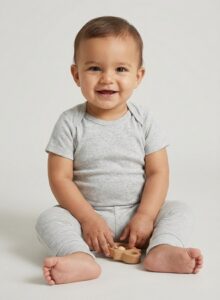
You’ll find Om Cottons positioned as a specialist in organic babywear manufacturing in India, focused on soft, safe, and sustainable garments for newborns and toddlers. They emphasize organic cotton and careful fabric selection to reduce irritation risks and meet parent expectations for comfort.
When you work with them for private-label or wholesale orders, expect capabilities across rompers, onesies, and basic essentials designed for export and domestic markets. Their facilities and processes aim to support scale while retaining quality control for sensitive baby skin.
You can rely on typical services such as custom branding, size grading, and packaging options that suit small brands and larger retailers alike. Lead times, minimum order quantities, and certification details will vary, so check those specifics with their sales team before placing orders.
3) Kidfactory
You can source a wide range of baby and kids’ garments from Kidfactory, a Kolkata-based B2B wholesale platform that connects retailers with factory-direct suppliers. They focus on casual, everyday wear made from common fabrics like cotton and blends suited for newborns and toddlers.
Ordering through Kidfactory gives you access to bulk pricing and frequent discounts, which helps if you manage inventory or seasonal assortments. Their platform emphasizes sourcing from trusted manufacturers, reducing the time you spend vetting suppliers.
You’ll find options across sizes, prints, and basic trims, and they offer free-shipping deals on certain orders to lower your landed costs. If you need customized labels or larger production runs, start a conversation early to confirm minimum order quantities and lead times.
4) Am Impex
You can rely on Am Impex for a wide range of wholesale kids and newborn baby clothing sourced from Ahmedabad, a major textile center. They focus on supplying retailers and businesses with everyday essentials and trend-led pieces.
Their catalog emphasizes organic cotton and basic cotton baby wear, which helps if you prioritize softer fabrics and simpler care instructions. Pricing and MOQ are tailored for B2B buyers, so you can scale orders according to your retail needs.
Am Impex maintains local manufacturing and partnerships across Gujarat to keep lead times predictable. If you value steady supply and straightforward product lines, their setup supports repeat ordering and volume purchasing.
5) Swastik Enterprises
You can source a broad range of infant and baby garments from Swastik Enterprises, a New Delhi–based wholesaler and exporter active since around 2015. They supply essentials such as onesies, rompers, booties, leggings, and hats, suitable for retailers and boutique buyers.
Their network includes experienced manufacturers and OEM partners, which helps maintain variety in styles, sizes, and colors. You’ll find options that suit budget and mid-range market segments rather than premium designer lines.
Swastik emphasizes competitive pricing and scalable order quantities, making them practical for small retailers and bulk buyers alike. If sustainability matters to you, note that they claim attention to sustainable practices, but verify specific certifications before committing.
Contact details and product lists are typically available through Indian trade directories and B2B platforms, so you can request samples and current pricing before placing larger orders.
Key Factors to Consider When Selecting Baby Clothes Manufacturers
Focus on measurable safety and quality credentials, fabric choices that suit different climates and skin sensitivities, customization limits and lead times, and clear MOQ and pricing structures that match your business model.
Quality and Safety Standards
You should verify certifications and test reports before placing any order. Look for OEKO-TEX Standard 100, GOTS for organic cotton, and compliance with Indian BIS standards or equivalent EU/US safety norms.
Ask manufacturers for recent third-party lab tests for harmful chemicals (AZO dyes, formaldehyde, heavy metals) and for flammability test results where applicable. Request documentation tied to specific batches, not generic company claims.
Inspect production processes on-site or via a local agent. Check stitch quality, seam strength, and colorfastness samples. Require a written quality-control plan showing incoming-material inspection, in-line checks, and final random inspection criteria.
Variety of Fabrics and Designs
You need fabrics appropriate for infants: 100% combed cotton, organic cotton blends, bamboo viscose, and soft modal are common choices. Demand fabric specs GSM, fiber content, shrinkage rates and request swatches before approving production.
Consider seasonal ranges: lightweight 140–180 GSM for summer, 200–260 GSM for winter garments, and thermal layering for colder regions. Confirm dye and wash processes (reactive vs. pigment dyes) to reduce skin irritation risks.
Evaluate the manufacturer’s design capabilities. Do they offer tech packs, CAD files, and pattern grading up to your size range? Ask for an available library of standard cuts (rompers, sleep sacks, bodysuits) and whether they can produce small-run design variations without affecting lead time significantly.
Customization Capabilities
Clarify the extent of customization upfront print types, embroidery, bespoke trims, labels, and packaging. Determine whether they do in-house embroidery and printing (screen, DTG, heat transfer) or outsource these services, as outsourcing can add time and variability.
Get clear minimums for custom elements and samples for approval. Ask for a timeline that separates development (prototypes) from production, and require a written revision policy for design changes to avoid surprise costs.
Confirm intellectual property protections. Request a non-compete or confidentiality clause for your designs and trademarked logos. Verify support for private labeling and bespoke hangtags, and check whether custom sizes or adaptive designs are feasible without large tooling costs.
Minimum Order Quantities and Pricing
Request a detailed price breakdown: cost per unit by size, setup/printing fees, trim and label charges, and freight & packaging costs. Insist on pricing tiers for volume discounts and a list of costs that change with colorways or fabric grades.
Negotiate realistic MOQs aligned with your inventory strategy. Many Indian manufacturers set MOQs by style-size-color (commonly 300–1000 pieces), but some will accept lower runs at higher per-unit prices or through shared production slots.
Include payment terms and lead times in writing. Standard terms often include 30–50% advance and balance on shipment, with production lead times ranging 20–60 days depending on complexity. Factor in buffer time for customs clearance and unexpected quality rework when planning reorder points.
Trends in Wholesale Baby Clothing Manufacturing in India
You’ll find two dominant forces shaping the industry: a strong shift toward certified eco-friendly fabrics and a rapid adoption of automation and digital systems that cut lead times and reduce defects.
Sustainable and Organic Materials
You can expect suppliers to prioritize GOTS-certified organic cotton, bamboo blends, and low-impact dyes for infant garments. Manufacturers increasingly list fabric certifications (GOTS, Oeko-Tex) on product sheets so you can verify claims before ordering.
Smaller batch runs of organic rompers, onesies, and sleepwear let you test new styles without large inventory risk. Many factories now offer traceability—lot numbers tied to specific cotton farms—so you can demonstrate supply-chain transparency to retailers and customers.
Price premiums exist: organic goods typically cost 10–30% more than conventional equivalents. Still, demand from Western retailers and boutique stores supports higher margins and longer-term contracts with ethical suppliers.
Emerging Technological Innovations
You’ll notice factories using digital pattern-making, automated cutting, and inline quality-vision systems to reduce errors and speed production. These tools lower fabric waste and improve first-pass yield on stitched pieces like bodysuits and tiny trousers.
ERP and PLM integrations let you track order status, raw-material lead times, and compliance documents in one dashboard. That reduces miscommunication when you place private-label orders or request size-grade adjustments.
On-demand printing and small-run knitting machines let you run personalized prints and limited-edition collections economically. Use these capabilities to shorten sample cycles and bring seasonal pieces to market within weeks rather than months.